
Bell County District Courts Overview
District courts are the general-jurisdiction trial courts in Texas. They handle the cases too serious or too large for the lower courts. That means felony crime, divorce and other family suits, civil cases over set dollar limits, juvenile matters, and tax suits. Each numbered court can hear the full range, though some lean toward criminal or family work in practice.
Bell County sits within the Texas district court map, and it has six of these courts. They share one building, one online case index, and one clerk for their records. The judges are elected. The cases they decide carry the highest stakes in the county system, from prison sentences to custody orders.
List of Bell County District Courts
Bell County has six numbered district courts plus three associate or specialty courts that support them. They all sit at the Bell County Justice Center, 1201 Huey Road, Belton, TX 76513. The District Clerk keeps the records for all of them. The table lists each court and what it tends to handle.
| Court | Type / Jurisdiction | Location | Notes |
|---|---|---|---|
| 27th Judicial District Court | General trial; felony, civil, family | 1201 Huey Road, Belton | Seat of the District Attorney, Stephanie Newell; supported for felony by the District Clerk. |
| 146th Judicial District Court | General trial; felony, civil, family | 1201 Huey Road, Belton | Hears the full district docket. |
| 169th Judicial District Court | General trial; felony, civil, family | 1201 Huey Road, Belton | Hears the full district docket. |
| 264th Judicial District Court | General trial; felony, civil, family | 1201 Huey Road, Belton | Supported for felony by the District Clerk. |
| 426th Judicial District Court | General trial; felony, civil, family | 1201 Huey Road, Belton | Supported for felony by the District Clerk. |
| 478th Judicial District Court | General trial; felony, civil, family | 1201 Huey Road, Belton | Newest of the numbered district courts. |
| District Court Associate Judge | Associate; assigned district matters | 1201 Huey Road, Belton | Hears matters referred by the district judges. |
| IV-D Associate Judge | Associate; child support | 1201 Huey Road, Belton | Handles the Title IV-D child support docket. |
| Centex Child Protection Court | Specialty; CPS and child protection | 1201 Huey Road, Belton | Hears child protection cases; many records are confidential. |
Where District Courts Sit in the Texas System
Texas runs a layered court system, and the district courts sit in the middle of the trial level. Above them are the appeals courts. Below them are the county courts at law and the justice and municipal courts. The Texas Judicial Branch publishes a chart that shows how it all fits together.
The official overview of the Texas court structure is posted by the Texas Judicial Branch.
The Texas courts overview page lays out every court level and its place in the system.
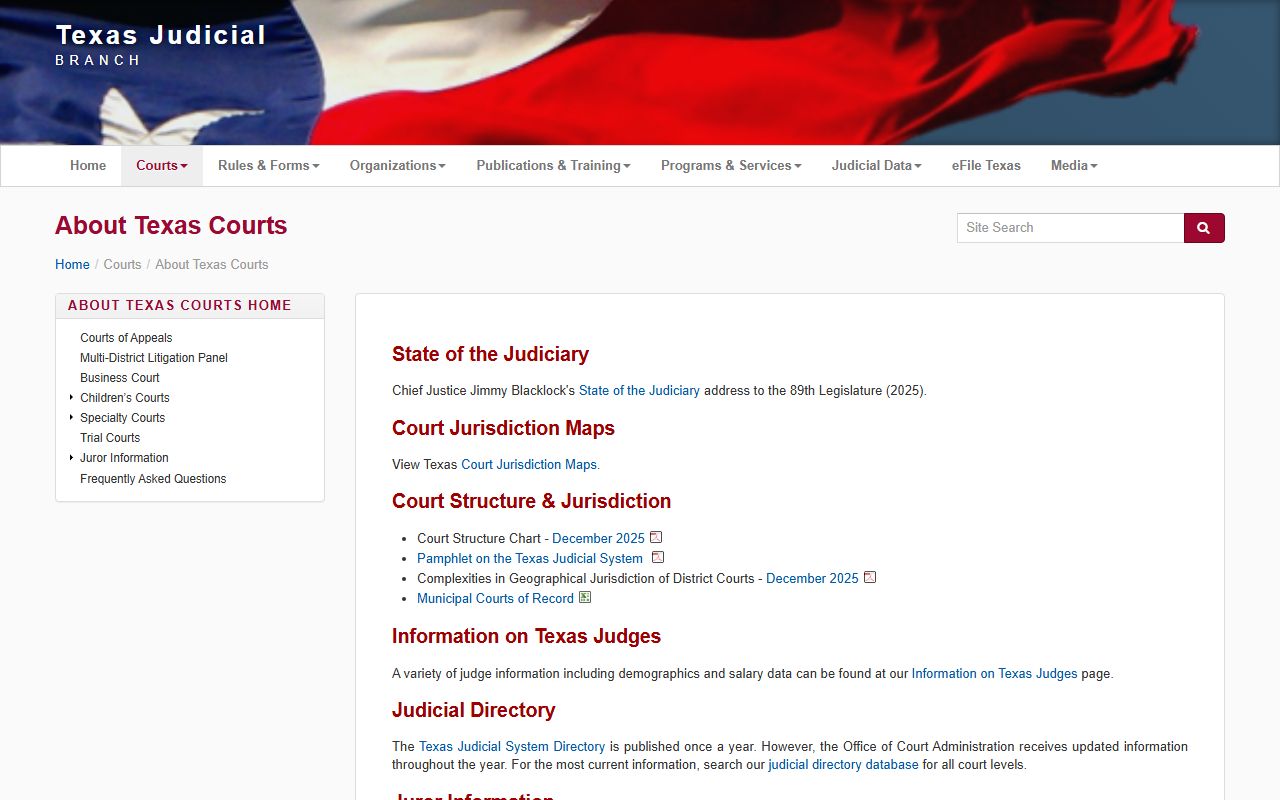
At the top, the Supreme Court of Texas hears civil and juvenile appeals. The Texas Court of Criminal Appeals hears criminal appeals. Below them sit the intermediate Texas Courts of Appeals. A second guide breaks the same structure down in plainer terms.
The State Law Library guide to Texas courts gives a clear, court-by-court summary.
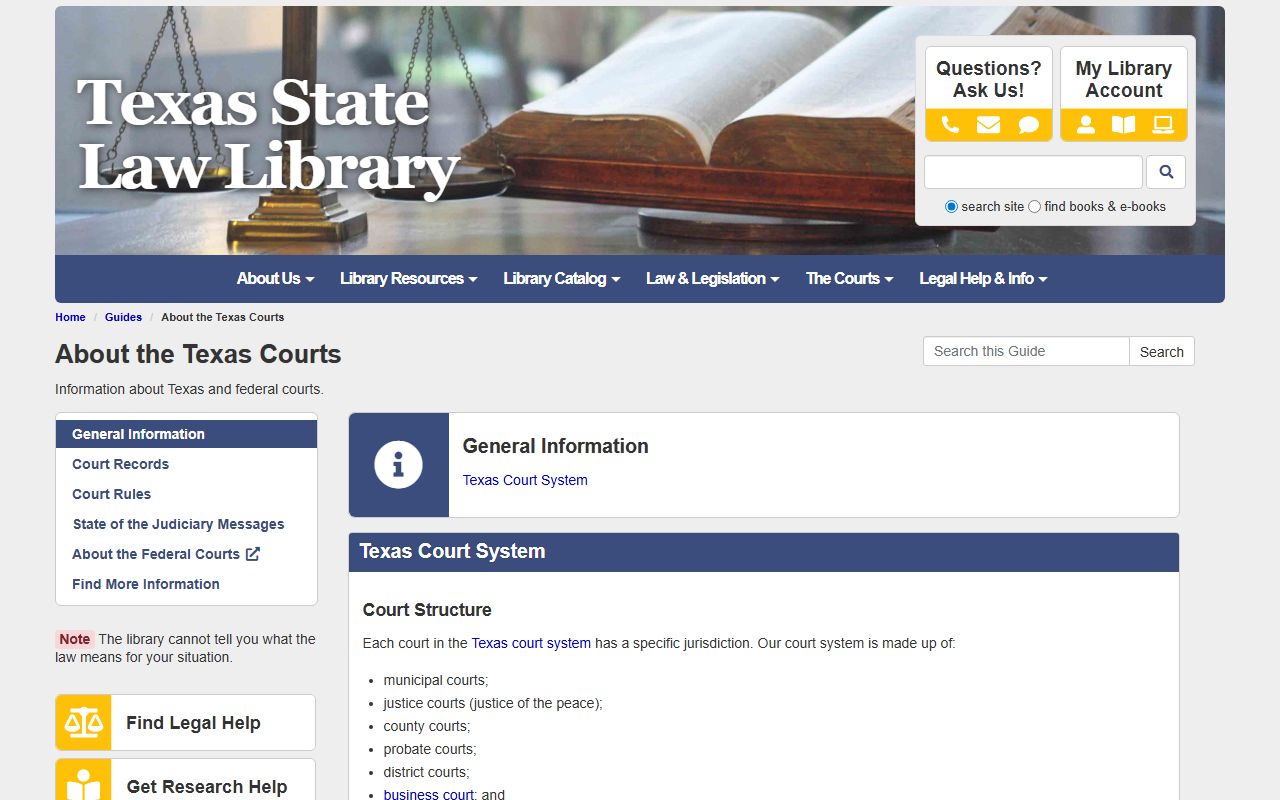
That guide is a good plain-English companion to the official chart when you are trying to place a Bell County case in the larger system.
District Court vs. County Court at Law vs. Justice Court
These three trial levels split the work in Bell County. The district courts take the heavy cases. The county courts at law take the middle band. The justice courts take the small stuff. The table below lines them up side by side.
| District Court | County Court at Law | Justice / JP Court | |
|---|---|---|---|
| Civil Cases | Higher-value civil disputes | Lower and mid-range civil cases | Small claims and debt claims up to the JP limit |
| Criminal Jurisdiction | Felony crime | Misdemeanors | Class C misdemeanors and citations |
| Family Cases | Yes; divorce, SAPCR, juvenile | Some, by local assignment | No |
| Other Work | Tax suits, protective orders | Probate, guardianship, mental health | Evictions, magistrate duties |
Bell County has three county courts at law (1, 2, and 3) and six justice of the peace precinct courts. County Court at Law 1, with Judge Paul A. Motz, presides over civil, probate, and mental health matters. For records from those lower courts, the County Clerk is the keeper.
How a Case Moves Through the System
Cases move up through court levels, and appeals move higher still. A small matter may start and end in a justice court. A felony or divorce starts in a district court. When a party appeals, the case climbs to the appellate level. The flow below shows the path from the lowest trial court to the top.
Case path: Justice & Municipal Courts › County Courts at Law › District Court › Texas Court of Appeals › Supreme Court of Texas (civil) or Texas Court of Criminal Appeals (criminal)
- A case is filed in the court that matches its type and value.
- The trial court hears it through pleadings, discovery, and trial or plea.
- The court enters a judgment, decree, or sentence.
- A losing party may appeal to a Texas Court of Appeals.
- The top courts, civil or criminal, may take a further appeal.
Note: most Bell County cases never reach an appeal, and a district court judgment becomes final when no party appeals in time.
Felony, Civil, and Family Jurisdiction
The district courts carry the most serious criminal work. Felony cases, from theft over the felony line to violent crime, are tried here. The District Clerk's Criminal Department supports the felony docket, including the 27th, 264th, and 426th District Courts, for file access and payment. District Attorney Stephanie Newell prosecutes for the 27th Judicial District.
On the civil and family side, the district courts hear divorce, suits affecting the parent-child relationship, child support, tax suits, and large civil claims. Juvenile cases also belong here. Many juvenile records are not open to the public. Texas Family Code Chapter 58 keeps most juvenile justice information confidential, which is why those files rarely show up in a public search.
The juvenile records statute is posted in the state code.
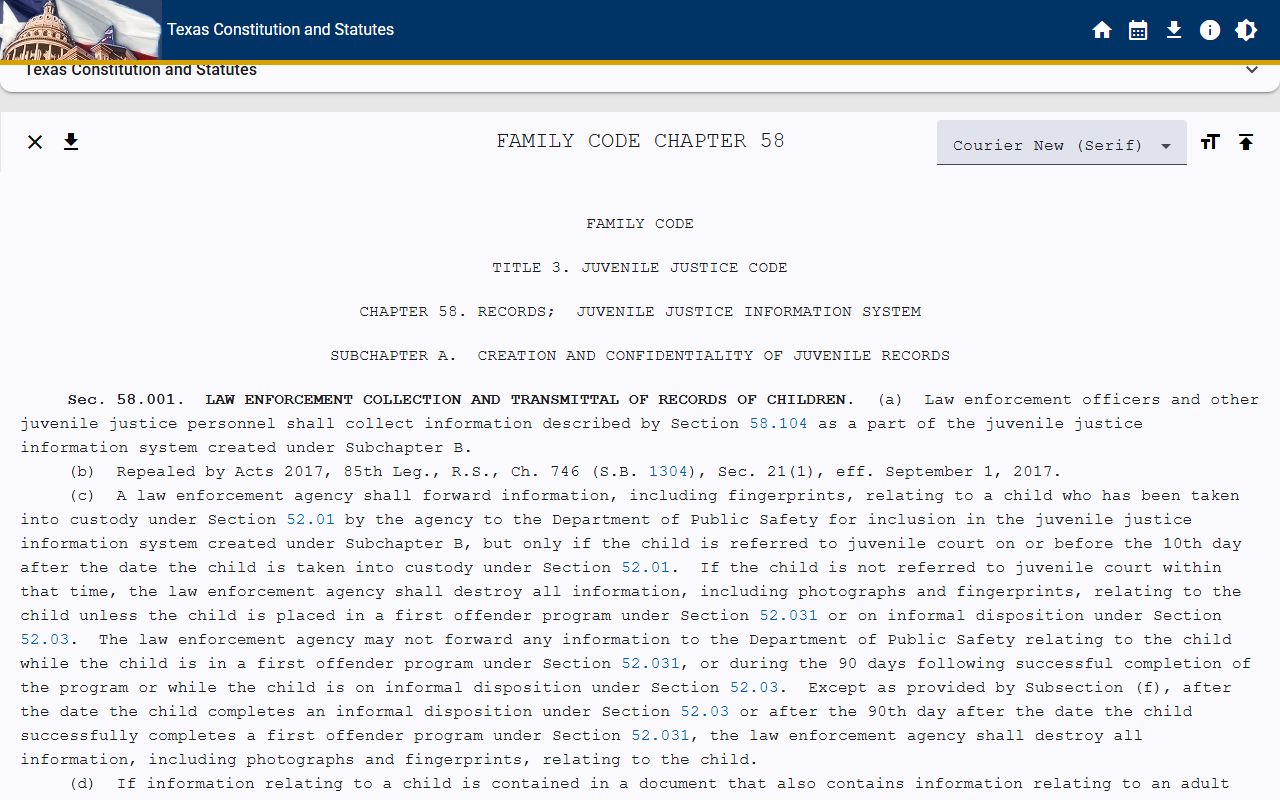
You can read the full text at Texas Family Code Chapter 58, which sets the confidentiality rules for juvenile justice records.
Standing Orders in Bell County District Courts
The district courts have adopted standing orders that apply across cases without a separate motion. Two recent ones matter to most family and criminal litigants. They take effect automatically and shape how a case proceeds.
- Family standing order
- Effective June 1, 2024, it governs children, property, and conduct of parties in every divorce and SAPCR case filed in Bell County while the case is pending.
- Criminal discovery order
- Effective March 21, 2024, it sets discovery rules for criminal cases indicted after that date, unless the presiding judge orders otherwise.
The District Courts page also links a remote hearing policy and livestream access, though remote appearance is judge- and case-specific, so follow the notice of hearing or the court coordinator's instructions.
District Court Dockets and Records
Every district court keeps a docket, the running list of case events and upcoming settings. Bell County posts dockets and runs the Odyssey portal for case lookup. Smart Search finds case files. Search Hearings finds court dates. The District Clerk holds the underlying file and issues certified copies.
For case lookup steps and the search fields, see court records. For hearing dates and weekly settings, see court dockets. To request a copy, contact the District Clerk.
Appeals and the Federal Distinction
An appeal from a Bell County district court goes into the Texas intermediate appellate system, the Texas Courts of Appeals. From there, a civil or juvenile case can reach the Supreme Court of Texas. A criminal case can reach the Texas Court of Criminal Appeals. These are state courts, all part of the same Texas branch.
Federal courts are a separate system. They sit apart from the county courts and hear federal crimes, federal civil claims, and constitutional questions. A Bell County district court case does not move into the federal courts on a normal appeal. The two systems only overlap in narrow situations, such as a federal habeas review after state appeals run out.