
Active Warrants in Bell County
Warrants in Bell County come from courts and from the state. A district or county court judge can issue an arrest warrant or a bench warrant. A magistrate can sign a warrant on probable cause. The state parole board can issue a parole hold. The Bell County Sheriff's Office is the agency that holds these warrants and works to serve them, and it lists a dedicated warrants line at (254) 933-5431.
Here is the honest part. No official public active-warrant search portal was found for Bell County. The county Odyssey Smart Search is a case-record tool, and its warrant search feature is turned off, so it will not return a list of open warrants. Because of that, the reliable way to confirm an active warrant is to call the Sheriff's warrants line or the court that issued it. A warrant often only becomes visible to the public after an arrest, when it shows up as a charge or hold line on the jail roster.
The Sheriff's Civil and Warrants page sets out the warrants function and the office contact lines.
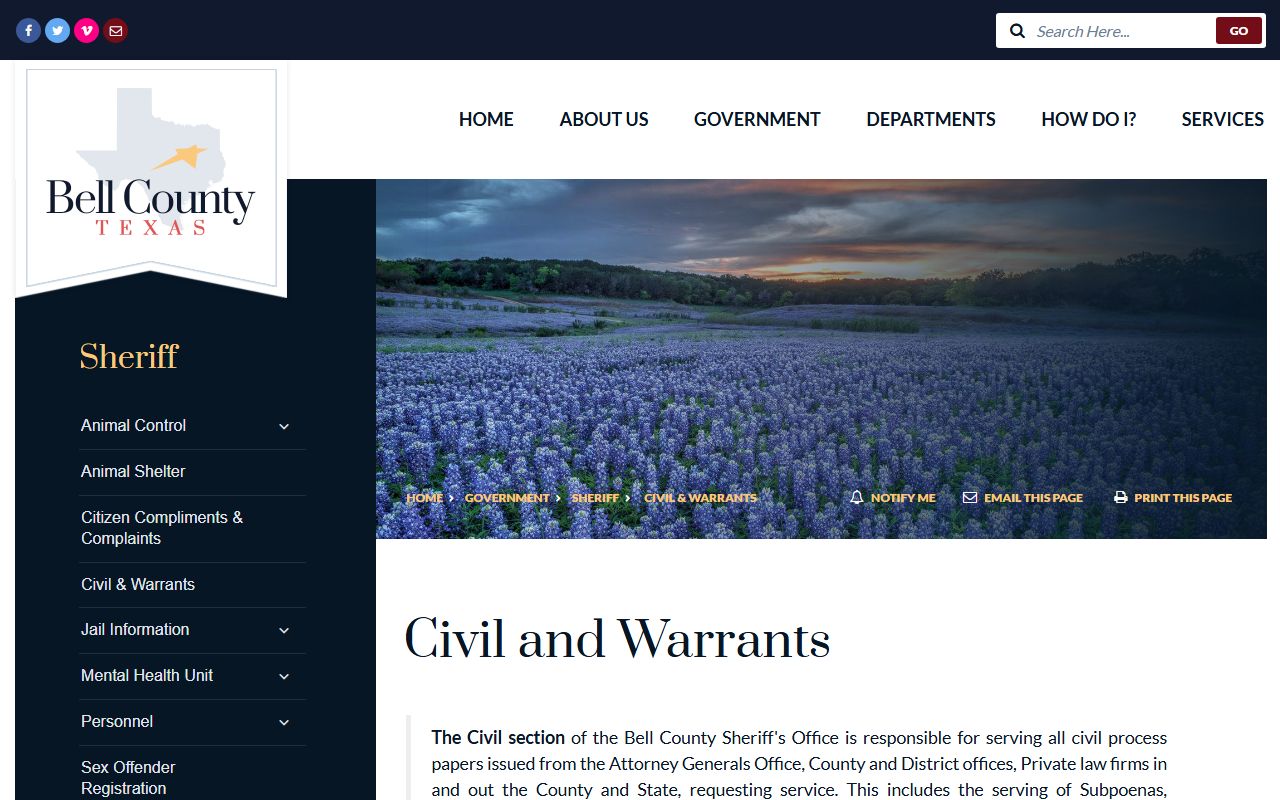
Use that page and the warrants line to confirm a warrant before you act on anything you read elsewhere.
Types of Bell County Warrants
Not every warrant means the same thing, and the type tells you who to call. Some come from a court after a missed date. Some come from the state after a parole problem. A few are tied to a search, not an arrest. The list below breaks down the main types you may run into in Bell County.
- Arrest warrant
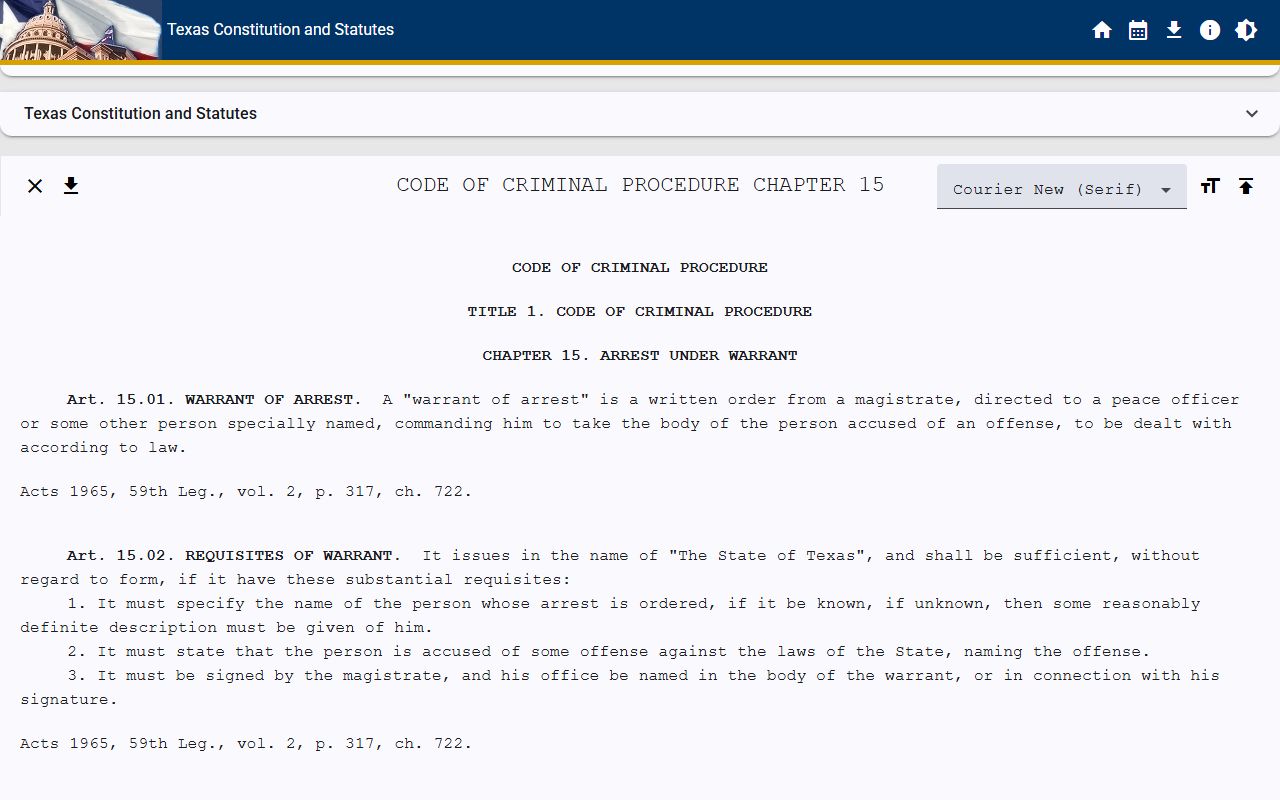
- Issued on probable cause under Texas Code of Criminal Procedure Chapter 15 to take a named person into custody.
- Bench warrant / capias
- Issued by a court after a failure to appear, a violation, or another court order.
- Capias pro fine
- A lower-court warrant tied to unpaid fines and court costs.
- Blue warrant
- A Texas parole violation hold; it shows up as a charge line in some Bell County jail profiles.
- Search warrant
- Authorizes a search of a place or item, and may stay sealed during an active case.
- Civil writs and process
- Court orders served by the Sheriff or constable; these are not criminal warrants.
The arrest warrant rules, including how one is issued and executed, are set out in the state code.
Note: a blue warrant is a state parole hold, so county jail staff cannot simply clear it without the supervising parole authority.
How to Search Bell County Warrants
Since no public warrant list exists for the county, the search is really a set of phone calls and roster checks. Start with the Sheriff's warrants line. Then go to the court that would have issued the warrant, since the issuing court holds the case and can confirm the status. If the person has already been arrested, the jail roster will show the warrant as a hold or charge line, which is the one place the public can see warrant data online.
- Call the Bell County Sheriff's warrants line at (254) 933-5431 to confirm a warrant and its type.
- Contact the issuing court or clerk for the case number, charge, bond, and any hearing setting.
- Check the Bell County Inmate Inquiry Portal after an arrest to see a warrant listed as a hold or charge line.
Do not rely on an unofficial warrant database to decide what to do, since those sites are often stale and are not the county's record.
Bell County Warrant Search Fields
There is no dedicated public warrant search form, so the closest public tool is the jail roster, which surfaces a warrant only after an arrest. The fields below are the inmate roster inputs you would use to find a booked person whose record may carry a warrant hold. A last name is the practical starting point, and a date range helps narrow recent bookings.
| Field Label | Type | Required | Notes |
|---|---|---|---|
| Name | Text | No | Searches inmate name on the jail roster. |
| Subject Number | Text | No | Tyler/New World subject identifier. |
| Booking Number | Text | No | The booking identifier for a specific intake. |
| In Custody | Checkbox | No | Default shows only people currently held. |
| Booking Date Range | Date | No | From and To dates to narrow a recent booking. |
What a Bell County Warrant Record Shows
When a warrant appears on a jail profile, it shows up inside the charges table as a hold or charge line. The sample profile fields below are drawn from how warrants render in the Bell County inmate record. A blue warrant or bench warrant can appear as the charge description, and the crime class may read as none for a hold. Bond may be blank, no bond, or tied to the booking bond table.
| Field | What It Shows |
|---|---|
| Charge Description | The warrant or charge line, such as BLUE WARRANT or BENCH WARRANT. |
| Offense Date | The date and time tied to the warrant or charge. |
| Docket Number | The parole, warrant, or court case number behind the hold. |
| Crime Class | The class level, which may read none for a pure warrant hold. |
| Arresting Agency | The agency that executed or holds the warrant. |
| Bond | May be blank, no bond, or linked to the booking bond table. |
Bond and Booking After Arrest
Once a warrant is served, the person is booked and a magistrate reviews bail. Texas bail rules sit in Texas Code of Criminal Procedure Chapter 17. Bond can be cash, a surety through a bond company, or a personal recognizance release. A single booking can carry more than one charge and more than one bond row, and one charge may be no-bond while another allows release.
The total bond shown on a profile is not always the figure a family should rely on without a call to the jail or bond desk. The booking and bail steps are covered more fully on the inmate side. A magistrate may also set conditions beyond money, such as no contact with a victim or no driving, and those conditions ride along with the bond. If the warrant is a hold from another county or the state, the local bond may not result in release until that other hold clears.
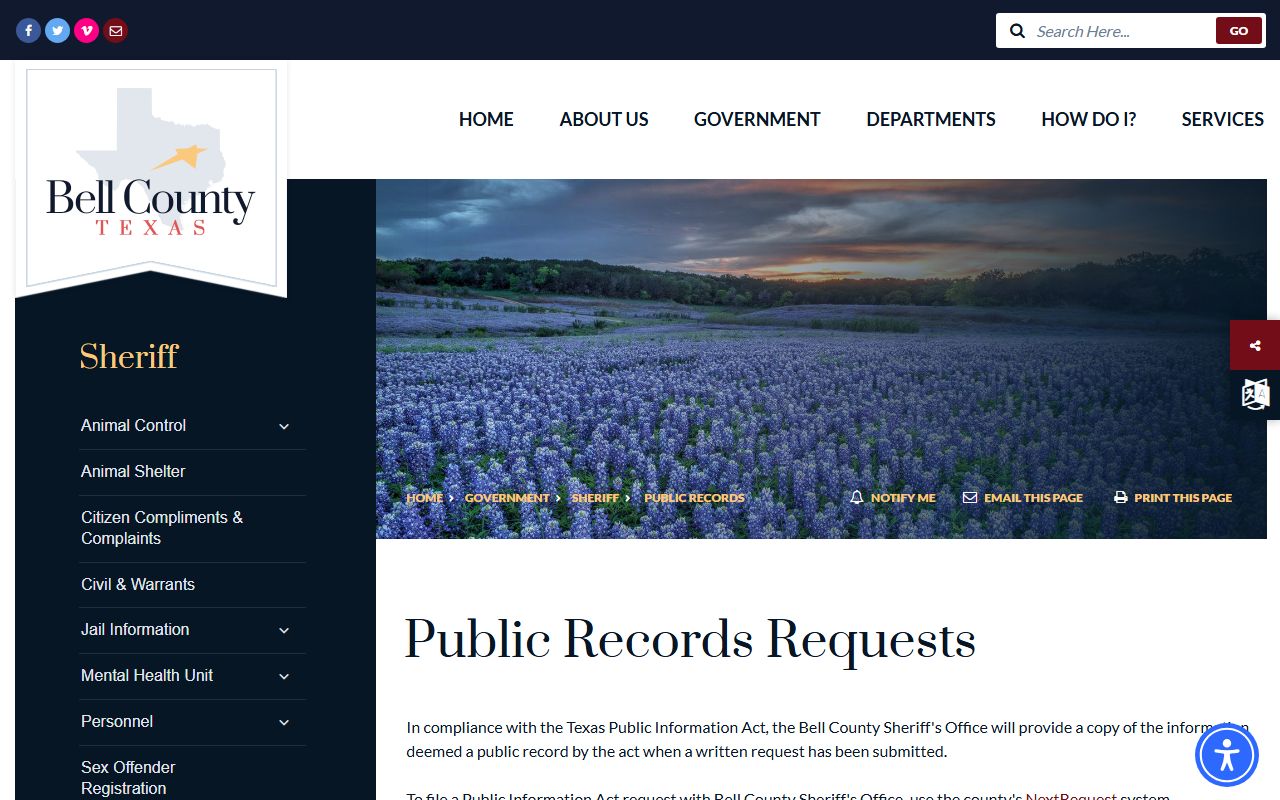
The Sheriff's public records page links the offices that handle warrant, bond, and report requests.
Chapter 17 also frames how a magistrate sets the conditions of release after a warrant arrest.
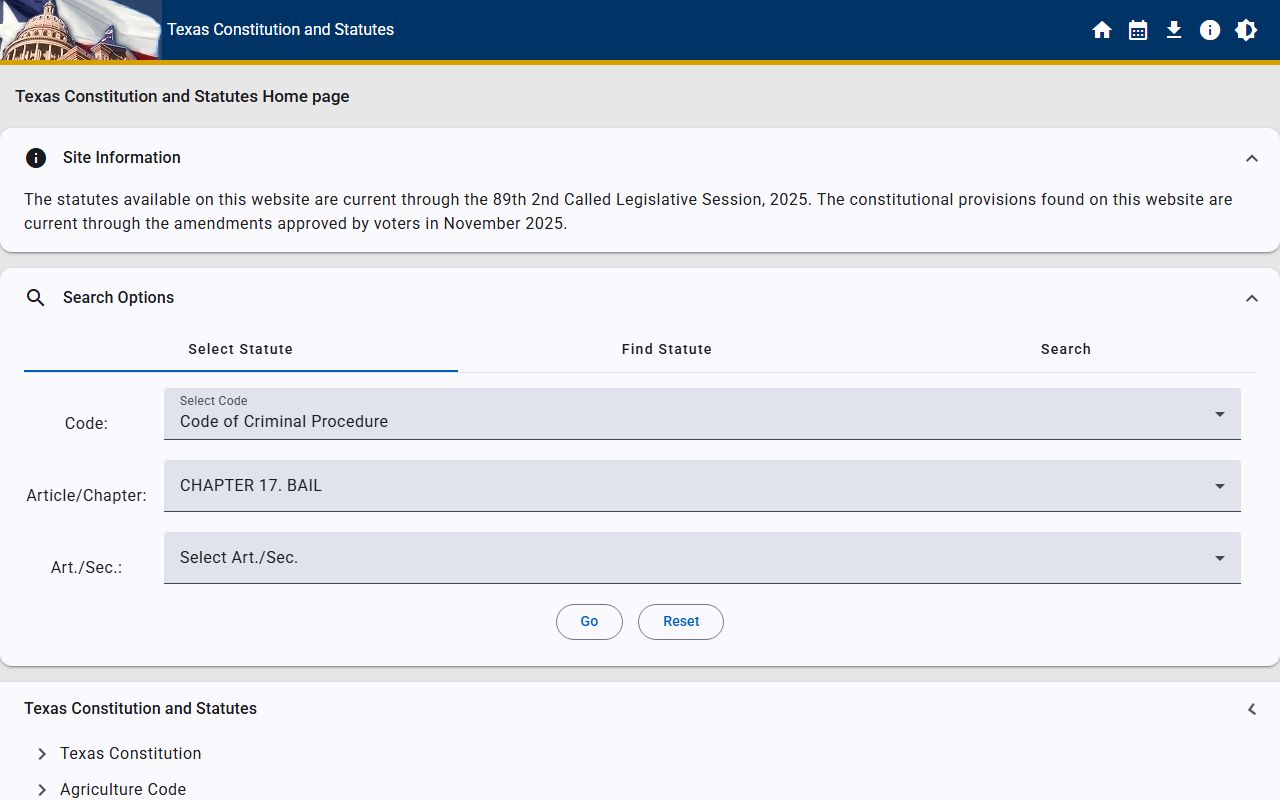
Read together with the arrest warrant rules, these chapters explain why bond can differ so much from one charge to the next.
How to Resolve a Bell County Warrant
Handling a warrant the right way starts with facts, not guesses. Confirm the warrant first, learn its type, and find the issuing court. A court warrant and a state parole hold are cleared in very different ways. The steps below lay out a sound order, and a lawyer should guide the plan before any surrender.
- Confirm the warrant with the issuing court or the Sheriff's warrants line, not an unofficial database.
- Identify the warrant type, case number, issuing court, charge, and bond.
- For a court warrant, ask the court or clerk about a hearing, allowed payments, or posting bond.
- For a parole or blue warrant, contact counsel and the supervising agency, since the jail cannot clear a state hold.
- If you plan to turn yourself in, call ahead about location, hours, property rules, and bond options.
- After resolution, confirm the court updates its record and the agency clears the warrant from active status.
Important: Talk to a defense lawyer before you turn yourself in. Counsel can confirm the warrant, arrange bond, and protect your rights at booking.
Tips on Bell County Warrants
The public sometimes wants to report a wanted person rather than search for a warrant. The Bell County Sheriff's Office links a Citizen Tips option from its main page for that purpose. A formal local Crime Stoppers reward program tied to the county warrants page was not confirmed in official sources, so treat any third-party tip site with care. To report a crime that is not an emergency, the Sheriff lists a non-emergency line, and emergencies should always go to 911.
Restricted Bell County Warrant Records
Some warrants are not public at all. A search warrant can stay sealed while a case is under investigation, which keeps the target from learning of it too soon. Juvenile matters are confidential under state law. Federal warrants are not Bell County records and are handled through federal agencies, not the county Sheriff.
Because the county runs no open warrant list, the absence of a public record does not prove a warrant does not exist. The only sure check is the issuing court or the Sheriff's warrants line. For the law behind law enforcement record limits during active cases, the Bell County public records page covers the open-records process.
An attorney plays a real role here. Counsel can confirm a warrant through the court without tipping off an arrest, ask the court to set a bond or recall a bench warrant, and arrange a planned surrender. For a felony warrant out of a district court, the District Clerk and the District Attorney's office are part of that picture, since the prosecutor controls the underlying charge. A lawyer can also tell you whether a warrant is local, municipal, JP, state parole, another county, or federal, which decides who must act to clear it.